
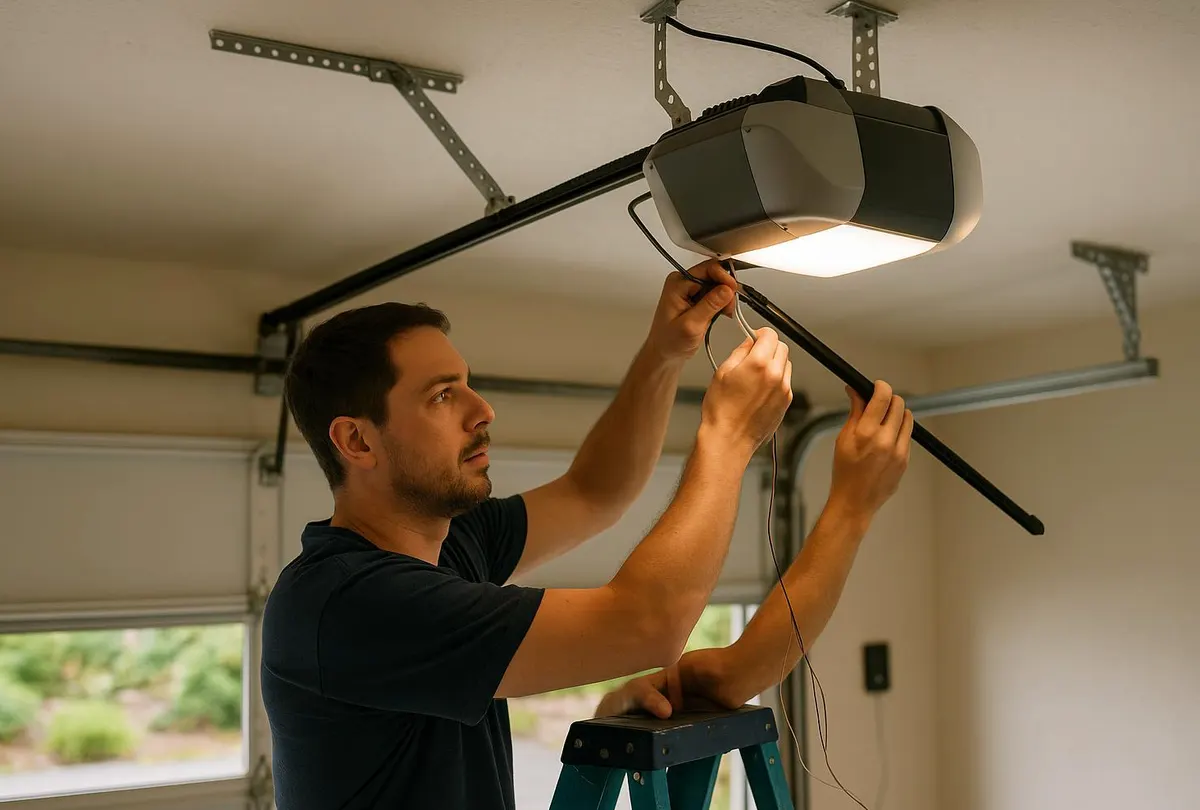
Short answer: most general home inspectors do a visual check and run the door up and down once. They rarely test spring balance, inspect cable fraying, check the auto-reverse safety sensors with an object, or look at what's actually driving the opener. On older homes around Plymouth, those are exactly the systems that take the brunt of freeze-thaw cycles, road salt, and decades of nor'easters. A door that opens smoothly on a 60-degree afternoon can still be hiding a spring that's one cold snap from failing.
Here's a walkthrough you can do yourself in 15 minutes, before you're locked into the sale.
1. Disconnect and lift-test the door by hand
Pull the red emergency release cord so the opener disengages, then lift the door halfway by hand. It should stay put and feel roughly balanced — not snap shut, not fly upward.
If it fails: the springs are out of balance or weakening. This is the single most common issue inspectors skip, and it's also the one that turns into a safety hazard or a surprise repair bill soon after move-in.
2. Look closely at the springs themselves
Check for visible gaps in the coils, rust pitting, or a spring that looks stretched compared to its neighbor (if there are two).
If it fails: rust and pitting are accelerated by salt spray and humidity swings, both common here. A spring that looks fine in October can seize or snap during the first hard freeze.
3. Inspect the lift cables on both sides
Look for fraying, kinks, or rust at the drum where the cable winds.
If it fails: a frayed cable can slip or snap under tension, and if it lets go while the door is up, that's a heavy door coming down fast. Don't operate the door until it's addressed.
4. Check the tracks for rust, dents, and gaps
Run a hand along the vertical and curved sections. The rollers should sit fully inside the track with no daylight showing at the gap.
If it fails: misaligned or rusted tracks cause grinding, jumping, and premature roller wear — and they're a classic sign of a door that's been fighting ice buildup for years without adjustment.
5. Test the auto-reverse safety sensors
Close the door and wave a broom handle through the photo-eye beam near the floor. The door should reverse immediately. Also try closing it against a block of wood on the ground.
If it fails: this is a genuine safety issue, not a convenience feature. Misaligned or disconnected sensors are common when a previous owner DIY'd a repair.
6. Check the opener's age and condition
Look at the motor housing for a manufacture date or model sticker. Older chain-drive units (often 15–20+ years) are common in original garages and may lack modern safety reversal and rolling-code security.
If it fails or is unclear: budget for an opener replacement, especially if there's no battery backup — a real consideration during winter power outages from nor'easters.
7. Examine weatherstripping and the bottom seal
Look for cracked, flattened, or missing rubber along the bottom and sides.
If it fails: expect drafts, meltwater pooling inside the garage, and faster corrosion of everything stored near the door — a bigger deal with our freeze-thaw winters than in milder climates.
8. Check panels for water staining or soft spots
Press gently on the bottom panel, especially on wood or older steel doors common in this area's original housing stock.
If it fails: soft or stained panels mean moisture has been getting in, which only gets worse with another South Shore winter.
9. Listen during a full open-close cycle
Grinding, popping, or a loud bang partway through usually points to a worn roller, a failing spring, or an opener gear set that's on its way out.
When to call Plymouth Garage Door Pro
If any of these checks raise questions — a door that won't hold its balance, cables with visible wear, or an opener that's clearly original to the house — it's worth getting a second opinion before you close or right after you get the keys. We handle spring replacement and full garage door maintenance visits that cover exactly this list: balance, cables, tracks, and opener safety settings, adjusted for New England's freeze-thaw cycles and salt exposure.
If you're about to buy or just moved into a home in Plymouth, Kingston, Duxbury, Marshfield, Carver, Wareham, Middleborough, or Pembroke, call Plymouth Garage Door Pro for a pre-winter inspection before the first hard freeze hits.